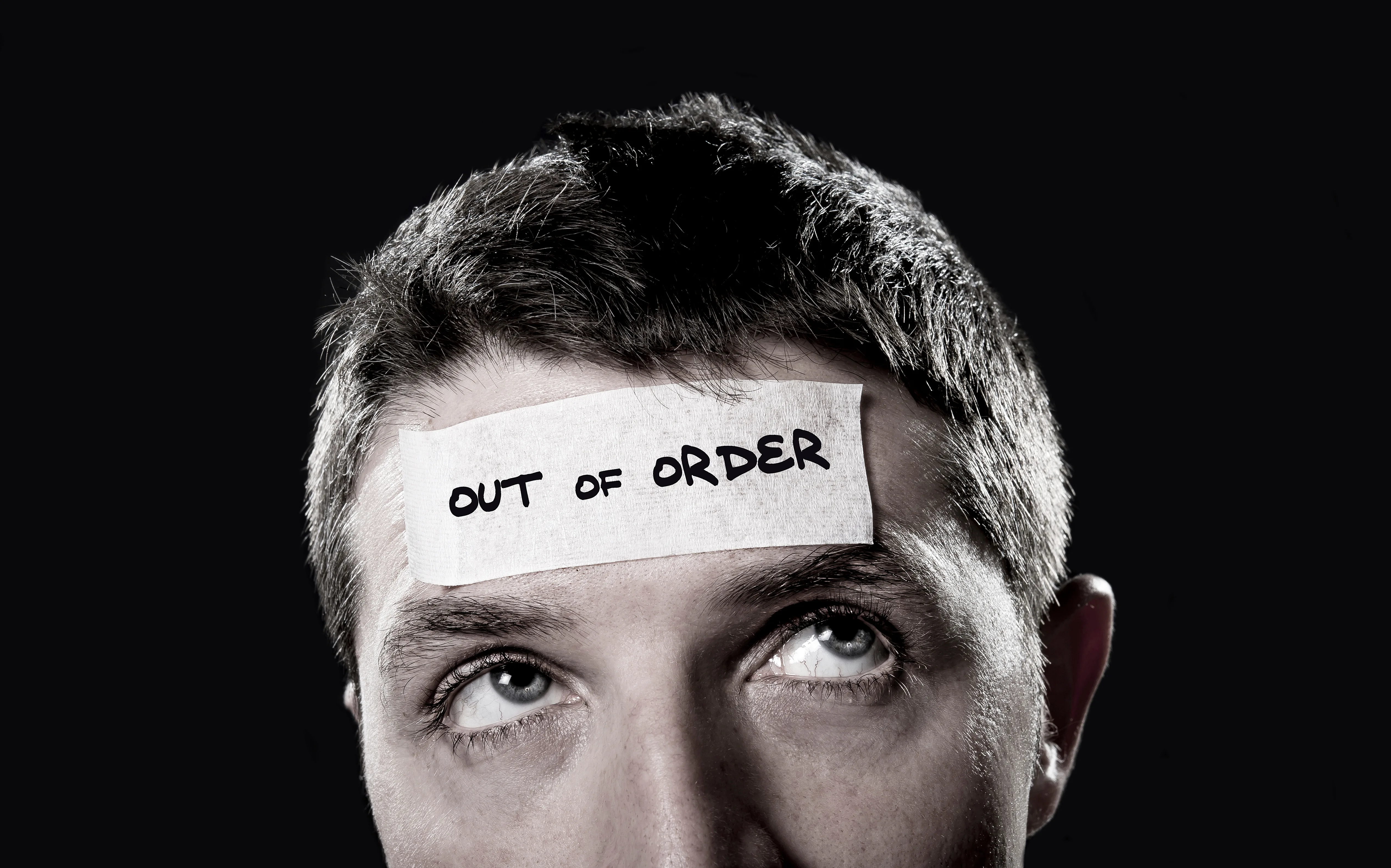
In today’s workplace, attention is chronically fragmented, one email, notification, or “quick sync” at a time. The always-on device, the after-hours message, the Slack channel that’s still live at 9pm, means our brain rarely gets a break. This didn’t use to be true, but unlike other workplace redesigns, this wasn’t an intentional or strategic choice; it simply happened over time. The more we valued responsiveness, and the more tools we introduced to be responsive, the more inevitable the constant interruptions and always-on work culture became. Today, we find ourselves in a work environment where cognitive overload, defined as the point at which the amount of information or the complexity of a task surpasses what working memory can process at once, is the norm, not the exception, during a challenging season.
Part of what makes this challenge hard to address is a myth too many of us still buy into: that some people can switch quickly between tasks or consume massive amounts of information and maintain focus, and others can’t. That’s not true. Every time we redirect our attention, from a report to a Teams message back to the report, there's an unavoidable cognitive cost. Sustained information overload has the same cost. The work we do immediately after is slower and less accurate, regardless of how sharp we are.
The instinct is often to chalk up an inability to focus to a personal failing. The person isn’t disciplined enough, not efficient enough, or not resilient enough. But it’s a biological reality, not a character flaw. What's worrisome is that it’s getting worse at the very moment organisations can least afford it, as complexity, uncertainty, and the volume of information we are expected to process keeps accelerating.
What’s actually happening
Cognitive overload isn’t the same as being spread too thin; it's what being spread too thin produces. Double-hatting, absorbing a reorg's leftover work, or filling an interim role are how someone ends up spread too thin in the first place; cognitive overload is the mental cost of trying to hold it all at once. The part of the brain responsible for focus, judgement, and weighing competing priorities, called the prefrontal cortex, is also the part most sensitive to overload. It's the same region that holds information in working memory long enough to reason with it: the numbers in a business case, the three competing priorities for a difficult conversation, the thread of an argument in a long negotiation. When we push that system hard enough, for long enough, without a break, it doesn't fail gracefully. It fails spectacularly. It shifts toward a faster, more reactive mode of operating. People start thinking worse, but faster, and are often the last to notice it's happening to them.
Where it costs you money
None of this is an abstract cognitive science point. It’s the strategic account manager who reads a critical customer escalation between meetings and fires off a two-line response, only to realise the next day their response missed the main point. It’s the steering committee that approves a business case in the 15 minutes allotted to it on the meeting agenda, even though no one had an uninterrupted hour beforehand to stress-test the numbers. It’s the manager who doesn’t slow down to log concerns as they happen, and later can’t build the paper trail needed to manage someone out when its warranted.
None of this looks concerning on the surface. People are in every meeting. Every message gets a reply. Utilisation is high, but high utilisation of a fragmented, reactive brain isn't the same as high-quality thinking. The gap between the two is where strategic mistakes, missed risks, and mediocre decisions accumulate. If we’re honest with ourselves, many of us have probably caught ourselves thinking, “How did I green-light that?” at least once.
Some of this is a straightforward volume problem. Judgement degrades the more decisions we make without a break and even micro-decisions, like “should I respond to this now or later?” or “what time should I put this meeting?” chip away at our limited capacity. The more decisions we make, the less attention we have for what really matters. If you’ve ever received a slide deck with a title something like V7_Final_V2_Final_Final you’ve seen this problem first hand.
AI is only making it worse
If your organisation is betting on AI to help fix this problem, there’s some bad news. The pitch has been that AI absorbs the routine cognitive load, freeing people up for higher-value thinking. But a 2025 study from Microsoft Research and Carnegie Mellon University, surveying knowledge workers across hundreds of real instances of generative AI use, found the opposite. AI use shifted people's mental effort away from independently working through a problem and toward simply checking whether the AI's answer looked plausible. A similar study by Wharton calls this “cognitive surrender”. It’s not laziness; it’s the predictable path an already overloaded brain takes when a confident-sounding answer is offered, and there’s no spare capacity left to consider it properly. We’re starting to see costly examples in the news cycle: lawyers submitting case briefs with fabricated supporting cases and consultants delivering reports with fabricated references to academic papers.
There’s a second, more visible version of the same problem at play. If you’ve ever received a several-page email for what should have been a two-line project update, you’ve experienced AI-output overload firsthand. It’s the inevitable consequence of handing writing over to a tool and hoping for the best. This doesn’t just add to someone’s reading pile; it quietly signals that the sender’s time was worth protecting and the reader’s wasn’t. Ironically, a good AI summary tool is often the fastest way to defend your own attention against someone else’s AI output. But, it’s a small consolation.
None of this is an argument against AI. It’s a warning about what happens when you hand a faster information tool to a workforce that is already cognitively overloaded and starved of attention. Given the choice between thinking something through and trusting a confident-sounding answer, an already-depleted brain will reliably take the easier path. If your AI rollout isn't paired with a serious, explicit conversation protecting human judgement, not just adopting the tool faster, you’re accelerating the attention problem in your organisation.
What we can control
We can’t put the genie back in the bottle. Rapid-fire interruptions and information overload are here to stay for the foreseeable future. The solution isn’t telling people to “manage their time better,” “dig deeper,” or “be more efficient.” A meditation app won’t solve it either. And, the temptation to think different people will handle it better is the wrong solution too. The root of the issue is human biology, not capabilities or motivation.
There are a handful of levers that can move the needle:
1. Protect thinking time on strategic decisions the way you protect capital.
Decisions above a certain threshold – a new sales strategy or a major change – should have a mandated minimum lead time with dedicated, uninterrupted preparation, the same way you'd insist on due diligence.
2. Set explicit notification norms for all staff.
If the CFO is expected to answer a Teams message within five minutes during board prep season, or an analyst in the middle of an insight-generation session, no individual discipline will fix that. Set the norm and model it from the top, with the same seriousness as any other policy.
3. Govern AI use for judgement, not just adoption speed.
If AI tools are being rolled out to reduce workload, pair that rollout with an explicit expectation that decisions above a certain stake still get independently reasoned through, not just checked for plausibility. It’s a critical conversation for your risk and people function together with IT.
4. Measure fragmentation, not just output.
Most organisations track hours worked, messages sent, or utilisation. All of which reward busyness. Almost none track whether people are getting sustained blocks of uninterrupted time on the decisions that matter most. If you don't measure it, it will keep eroding invisibly.
5. Encourage quality mental recovery time throughout the day.
Focus time is great, but it's not sufficient. The brain also needs a genuine downshift between effort, and most calendars never give it one. Treat gaps between meetings as protected disengagement, not unscheduled inbox time; checking messages between calls keeps the brain in effort mode when it’s needs to be resting. Model this visibly at the manager and senior level: a leader who visibly steps away after a hard meeting, rather than diving straight into the next task, sets a stronger norm than any policy.
The bottom line
Attention isn’t a soft, personal wellbeing issue- it underpins every strategic capability your organisation needs.
Poor calendar habits, job demands, information overload, and AI deployment choices are consuming too much of it. An organisation that keeps optimising for responsiveness will keep getting responsiveness and will keep losing the one thing it's people need the most: the space to think. That trade-off is currently the default, and the organisations that stop accepting it as an unavoidable cost of modern work are the ones that will get the quality of work they're paying for.
Written by Jenn Callaway, Zest for Work.